
Building Moisture Meters - Precision and Quality from GANN
Moisture is one of the biggest threats to any building. Excessive moisture in a house can lead to mold growth, which can not only cause damage to the building but also pose health risks to people spending time in rooms with high humidity. Even if the screed remains damp longer than the construction plan allows, using a building moisture meter is essential, as its readings provide clarity on the necessary measures to take.
Structural Moisture measuring instrumentsUsecases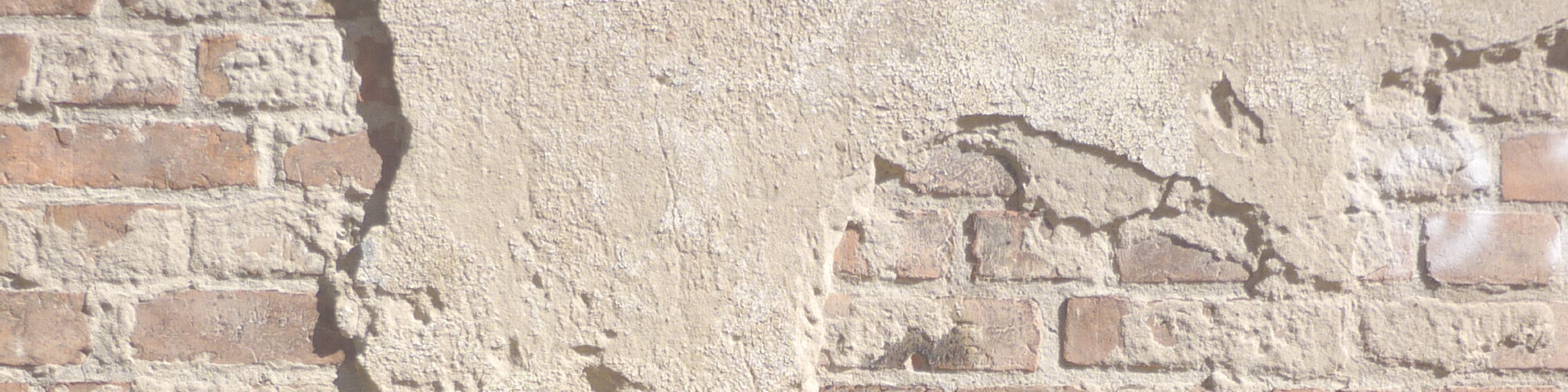
16 Structural Moisture measuring instruments


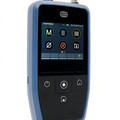


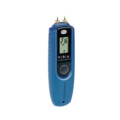
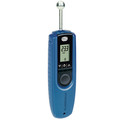
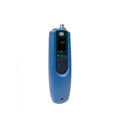
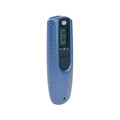

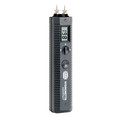
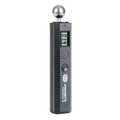

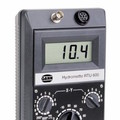
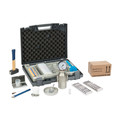

None of our products can be used with the selected combination of methods.
Change filterUsecases in the field of Structural Moisture

Non-destructive measurement of structural moisture using the ball electrode

Measuring the moisture of an insulation material in the edge joint of a screed covering
Creating moisture profiles or measuring at different depths in a wall, ceiling or floor
Depth measurement of hidden wooden beams in old buildings or timber-framed buildings
Measuring moisture in insulated and ventilated claddings and flat roofs
GANN Building Moisture Meters - Your Benefits
- Quality & Precision: GANN building moisture meters provide accurate readings for DIYers, tradespeople, and professionals.
- Many GANN building moisture meters are also multifunctional: They can measure building moisture, wood moisture, and air humidity.
- User-Friendly & Durable: GANN building moisture meters are built for daily use.
- Sustainability Through Repairability: If a GANN meter malfunctions, it does not need to be completely replaced; instead, it can be repaired at our factory.
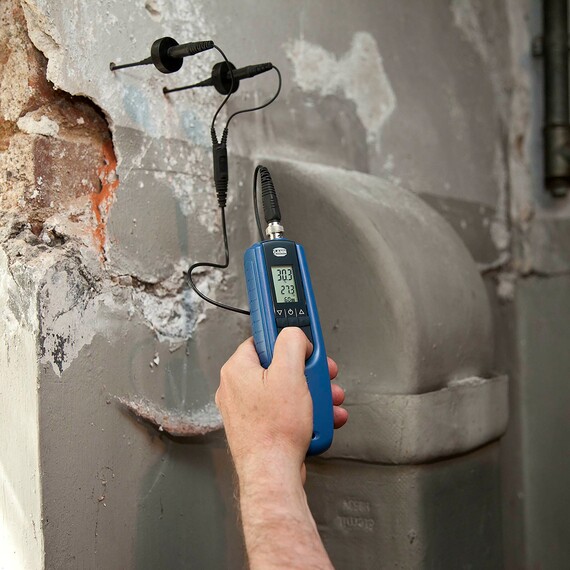
How exactly does a building moisture meter work?
Our GANN building moisture meters use one of three methods:
- Resistance-based meters:
Two pins are inserted into the material to measure the electrical resistance, which is directly related to the moisture content within the building material.
Advantage of this measurement method: It provides accurate readings.
Disadvantage of this measurement method: Small punctures, which may leave marks during measurement, are required. - Capacitive measurement devices:
Ideal for non-invasive measurements. Capacitive measurement devices are based on the principle of measuring electric fields and provide quick assessments without leaving drill holes or causing surface damage.
Advantage of this measurement method: This method is fast and non-invasive.
Disadvantage of this measurement method: The measured values serve more as a guide. - CM measuring devices (carbide method):
Particularly common in screed construction. In this measurement, chemical reactions are triggered using calcium carbide to subsequently determine the residual moisture content with precision.
Advantage of this measurement method: This method is officially recognized and is very precise.
Disadvantage of this measurement method: Suitable for professionals, but generally not an option for DIYers.
Typical Applications in Construction
A construction moisture meter isn’t just used on large construction sites; DIYers can benefit from it as well.
- Screed and Concrete:
Before installing flooring, the moisture content of the screed must be determined. If the moisture content is too high, there is a risk of warping, cracking, or mold forming under the flooring. - Masonry:
Moisture is a common problem, especially in older buildings. Bricks, sand-lime bricks, and aerated concrete have different material properties, and their moisture content should be measured precisely and regularly. - Insulation materials and flat roofs:
Wet or damp insulation materials quickly lose their insulating properties. A building moisture meter helps detect such problems in a timely manner.
Quality has a name: GANN Mess- u. Regeltechnik GmbH
- Made in Germany: All devices are manufactured at our facility near Stuttgart
- Precision, measurement accuracy, and reliability: For DIYers, tradespeople, and professionals
- Versatile applications: Measuring devices for humidity, temperature and flow
- Family-owned business: Founded in 1931
- Long service life and repairability of the devices
Frequently asked questions
Which measuring device is suitable for wall moisture?
Both capacitive and resistance-based moisture meters are suitable for measuring wall moisture. An advantage of capacitive meters is that they penetrate several centimeters into the masonry without causing damage, allowing a large area to be examined quickly. GANN models offer particularly high measurement accuracy and device-specific professional material characteristics. The Hydromette® BL Compact B 2 and the Hydromette® Compact B evo 100 are ideal for the quick, non-destructive detection of moisture pockets in walls. For depth or layer measurements, a device based on the resistance measurement principle is preferable. The Hydromette® BL E supports resistance measurement, which - when used with the appropriate accessories - allows for the assessment of deeper material layers. At the same time, the Hydromette® BL E, for example, also offers the option of non-destructive measurement by connecting a capacitive measurement probe - making it an ideal combination device. For detailed structural analyses, the Hydromette® CH 17 is recommended, as it supports various capacitive and resistance-based measurement probes and thus precisely evaluates mineral-based building materials such as screeds, concrete, or plaster. Simple consumer-grade devices are usually sufficient only for a rough assessment, whereas professional measurement tasks require a high-quality device with reliable scaling and reproducible results.
How does a wall moisture meter work?
A wall moisture meter operates non-destructively using the capacitive principle or minimally invasively using the resistive principle. The device generates a high-frequency electric field that penetrates several centimeters into the building material. Since water is more electrically conductive than dry plaster, masonry, or concrete, moisture alters the capacitance of this field. The device displays this change as a measurement - often in digits - on the screen. In resistance-based meters, metal pins are inserted into the material, and the electrical conductivity is measured. The conductivity of kiln dry material is very low, or the resistance is so high that no significant current can flow. The more water present, the more conductive the material becomes, or the lower the electrical resistance. Capacitive measurement is preferable for quick, non-destructive measurement of even larger areas. When in use, the device is held at a 90° angle to the wall; higher readings indicate moisture or moisture penetration. Metals in the substrate, salt-containing building materials, or dense coatings can affect the measurement, which is why it is advisable to take comparative measurements on a dry reference surface of the same wall construction. For depth or layer measurements, drill holes must be made prior to the measurement. Appropriate measures must be taken to ensure that there are no electrical wires, water pipes, or other utility lines in the vicinity of the drill holes. For damage-related analyses, professional devices are often used that detect deeper layers and provide more reliable comparative values.
What values should a moisture meter for concrete display in digits?
Three factors are particularly crucial for evaluating the digital readings of concrete or screed: knowledge of the building material (e.g., lightweight concrete vs. normal concrete; anhydrite screed vs. cement screed), the type of installation (e.g., with reinforcement or underfloor heating), and the measurement technology used. GANN devices offer dimensionless measurement in digits for both resistance measurement and capacitive measurement. The digit values obtained using these different measurement techniques must not be compared with one another under any circumstances. In addition, GANN offers devices that cover both the 0-100 capacitive measurement range and the 0-200 measurement range. These different measurement ranges are accompanied by corresponding maximum penetration depths. For example, the measurement field of the Hydromette® Compact B evo 100 penetrates approximately 10–20 mm into the concrete, while the measurement field of the Hydromette® BL Compact B 2 can penetrate approximately 20-40 mm. Therefore, conversion between these scale ranges is not possible. Dry or standard-moisture concrete typically falls between 20 and approximately 45–55 digits (scale range 0–100) or between 30 and approximately 70–90 (scale range 0–200), while slightly elevated moisture levels are detectable between 55 and 75 digits (scale range 0–100) or 90 and 120 (scale range 0–200). Values above these ranges often indicate significant moisture penetration or a subfloor that has not yet dried out. Since “digits” do not represent percentages but rather device-specific comparative values, taking a measurement at a known dry location is helpful for reliably interpreting deviations. For binding approval decisions - such as laying flooring over the screed - CM measurement is still required; the “digit” measurement is primarily used for quick, non-destructive monitoring of moisture distribution in concrete.