
Measuring Humidity with Humidity Meters
While temperature measurements on construction sites or in buildings have long been standard practice, monitoring humidity is often still overlooked. Yet humidity has a direct impact on construction processes, material properties, and the long-term preservation of building structures.
Air Humidity measuring instrumentsUsecases
Inadequate humidity levels can not only compromise indoor air quality but also cause damage to screeds, wooden components, or plaster. A precise GANN humidity meter provides the critical measurements needed here. Based on this data, tradespeople, construction managers, and even DIY enthusiasts can take targeted measures such as controlled ventilation, dehumidification, or the use of technical humidification systems.
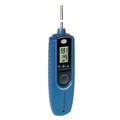
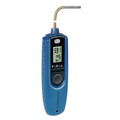
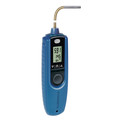
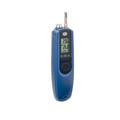
Our Hydromette devices for measuring relative humidity are suitable, for example, for humidity analyses, damage assessments, or for determining whether floor and wall coverings are ready for installation.
13 Air Humidity measuring instruments





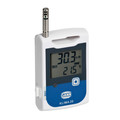
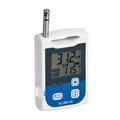
None of our products can be used with the selected combination of methods.
Change filterUsecases in the field of Air Humidity

GANN Humidity Meters - Your Benefits
- Quality & Precision: Accurate readings with GANN humidity meters for DIYers, tradespeople, and professionals.
- Many GANN humidity meters are also multifunctional: They can measure air humidity, wood moisture, and building moisture.
- User-Friendly & Durable: GANN humidity meters are built for daily use.
- Sustainability Through Repairability: If a GANN meter malfunctions, it does not need to be completely replaced; instead, it can be repaired at our factory.
Where exactly can moisture meters be used?
Moisture meters are indispensable in numerous professional, commercial, and residential applications:
- Construction sites, warehouses, and production facilities:
Monitoring humidity protects moisture-sensitive building materials, wood, screed, and paint from damage and ensures that further processing can proceed on schedule. - Building services and home automation:
Precise measurements help regulate air conditioning, ventilation systems, and dehumidification technology to create optimal conditions for buildings and technical systems. - Workshops and craft businesses:
High humidity can lead to corrosion, material warping, or static electricity - a moisture meter can help minimize these risks early on. - DIY Projects:
Even in the home, these devices help with drying walls, installing woodwork or screed, and protecting furniture and floors. - Horticulture and Greenhouses:
In these areas as well, measuring humidity enables appropriate regulation and optimal growing conditions.
Absolute and Relative Humidity
A humidity meter helps you keep track of the humidity levels in a room at all times, so you can take targeted action against air that is too dry or too humid. There are basically two ways to measure humidity.
- Absolute Humidity
Absolute humidity indicates how much water vapor (in grams) is present in one cubic meter of air. It is therefore also referred to as water vapor density and is measured in g/m³. - Relative Humidity
Relative humidity expresses the ratio of the actual moisture content to the maximum possible moisture content at the same temperature and is given as a percentage (%).
Quality has a name: GANN Mess- u. Regeltechnik GmbH
- Made in Germany: All devices are manufactured at our facility near Stuttgart
- Precision, measurement accuracy, and reliability: For DIYers, tradespeople, and professionals
- Versatile applications: Measuring devices for humidity, temperature and flow
- Family-owned business: Founded in 1931
- Long service life and repairability of the devices
Frequently asked questions
Where is the best place to put a hygrometer?
Measurements taken with a hygrometer should always be made in a location that accurately reflects the actual indoor humidity. The ideal position is at a height of about 1.5 m, not directly against exterior walls, and at least one meter away from windows, doors, and radiators. Drafts or direct sunlight can significantly skew the readings. In rooms with high humidity levels - such as bathrooms, kitchens, or bedrooms - a central location is recommended so that the device can reliably detect typical humidity spikes. Even in basements or unheated rooms, hygrometer measurements should not be taken directly against cold surfaces, as condensation forms there and can cause the device to display unrealistically high readings. It is also important to allow the device to acclimate for a few minutes so that the sensor can adjust to the temperature and humidity. Devices from Gann, such as the Hydromette® BL Compact TF 3, are compact and portable, allowing measurements to be taken at various locations. Climate data loggers are available for professional use in building diagnostics.
What humidity level does a hygrometer display?
A hygrometer measures relative humidity in percent - that is, the proportion of water vapor actually present relative to the maximum possible amount at the current temperature. In living spaces, levels between 40 and 60% are considered ideal. If the relative humidity falls below 35%, the air becomes too dry, which irritates the respiratory tract and mucous membranes. Conversely, levels above 65% increase the risk of mold, especially in poorly insulated areas. Household hygrometers typically measure in the range of about 20 to 90% RH. Professional devices provide reliable readings even beyond this range. Depending on the device, the measurement is taken either mechanically (e.g., using hair or synthetic fibers) or electronically via humidity sensors, which provide particularly fast and stable readings.
What is the difference between a hygrometer and a hydrometer?
A hygrometer measures humidity and indicates how moist or dry the air in a room is. A hydrometer, on the other hand, is used in liquids to measure their density or specific gravity, for example in winemaking, brewing, or aquariums. A hydrometer works on the principle of buoyancy: the denser the liquid, the higher the device rises. A hygrometer, on the other hand, uses mechanical or electronic humidity sensors. Although the terms sound similar, the two instruments serve completely different purposes - air measurement versus liquid analysis.
Are hygrometers useful?
Yes, hygrometers are extremely useful indoors because they help maintain a healthy indoor climate and detect moisture damage early on. They reliably indicate when the air is too humid - and thus promotes mold growth - or too dry - and irritates the respiratory tract, skin, and eyes. Especially in bedrooms, kitchens, bathrooms, basements, or new buildings, hygrometers provide important indications of when it’s necessary to ventilate thoroughly. This also helps prevent unnecessary heat loss. High-quality models - such as those combined with GANN measurement systems - also offer very high measurement accuracy for demanding applications. For example, the Hydromette® BL Compact TF-IR 2 enables a reliable assessment of conditions where temperatures fall below the dew point by combining surface temperature measurement via an infrared sensor with air humidity and air temperature measurements; it also allows for the detection of borderline situations on surfaces such as walls, ceilings, floors, and window and balcony door lintels.
What is the tolerance of a hygrometer?
The tolerance of a hygrometer depends on its design. Digital hygrometers typically have an accuracy of about ±2 to ±5% RH, while analog hair- or fiber-based meters often have an accuracy of ±5 to ±10% RH. It is important to note that accuracy is often temperature-dependent and that sensors can drift over time. Deviations can occur, particularly with lower-priced models, if the device has not been calibrated for a long time or is used under extreme conditions. It is therefore recommended to check the measurement accuracy regularly.
How do you calibrate a hygrometer?
A hygrometer can be calibrated at home using the so-called salt method. To do this, place the device in an airtight bag along with a small dish of saturated salt solution. The solution creates a constant relative humidity of 75%, which serves as a reference after several hours. It is important to always allow the hygrometer to fully acclimate to room temperature before calibration. Alternatively, calibration can also be performed using special reference solutions or by comparing measurements with a precise reference instrument. For professional calibration, specialized calibration laboratories offer various humidity points, in contrast to the single-point calibration at 75% RH mentioned above.
Do digital hygrometers need to be calibrated?
Yes, digital hygrometers should also be calibrated regularly, as their sensors can lose accuracy due to aging, fine dust, temperature fluctuations, or prolonged storage. Although digital models are generally more stable and precise than analog hair-dryer hygrometers, it is recommended to check them once or twice a year. Calibration is particularly important for applications such as monitoring indoor air quality, preventing mold, or protecting sensitive materials. The salt method is the simplest procedure here as well. If the displayed value deviates significantly from the expected humidity level, or if high accuracy is required, the device should be checked sooner.